Showing posts with label Colorado School of Public Health. Show all posts

Tuesday, April 3, 2012

DeGette urges EPA to consider health threats posed by gas drilling

The Colorado Independent
By Troy Hooper
April 3, 2012

U.S. Rep. Diana DeGette (Photo via http://degette.house.gov)
As the Environmental Protection Agency finalizes its air standards for hydraulic fracturing, U.S. Rep. Diana DeGette sent a letter today asking it to consider a new study that shows Colorado residents living near natural gas wells are exposed to increased levels of carcinogens and other toxins.


Continue reading...


Here is DeGette and Waxman’s letter in its entirety:


April 3, 2012
The Honorable Lisa Jackson
Administrator
U.S. Environmental Protection Agency
Ariel Rios Building
1200 Pennsylvania Avenue, N.W.
Washington, DC 20460
Dear Administrator Jackson:
EPA is working to finalize new standards for oil and gas operations to reduce emissions of smog-forming volatile organic compounds and toxic air pollutants that can cause cancer and other serious health effects. As you consider these standards, we ask that you consider a new study from the Colorado School of Public Health that raises concerns about the potential public health impact of air emissions from unconventional gas drilling operations. The findings from this study, while preliminary, reinforce the importance of your forthcoming rules and the need for additional research.
Scientists at the Colorado School of Public Health examined three years of air monitoring data in Garfield County, Colorado and concluded that residents living near natural gas wells may face increased exposure to benzene, a known human carcinogen, and other toxic chemicals, such as ethylbenzene, toluene, and xylene. The researchers found higher lifetime cancer risks for people living closer to the wells. They also concluded that these nearby residents have a higher risk of experiencing neurological and respiratory health effects, such as headaches, throat and eye irritation, impaired lung capacity, dizziness, fatigue, numbness in the limbs, and tremors.
The authors concluded:
[P]reliminary results indicate that health effects resulting from air emissions during development of unconventional natural gas resources are most likely to occur in residents living nearest to the well pads and warrant further study. Risk prevention efforts should be directed towards reducing air emission exposures for persons living and working near wells during well completions.
We support the responsible and safe production of U.S. oil and natural gas resources. The good news is that we can control potentially harmful air emissions from drilling operations by implementing proven technology and best practices already in use today. We hope that you will consider the results of this new study in your rulemaking, and we look forward to reviewing EPA’s new rules once finalized.
Sincerely,
Henry A. Waxman
Ranking Member
Diana DeGette
Ranking Member
Subcommittee on Oversight and Investigations


Monday, April 2, 2012

To Protect Americans' Health, NRDC Opposes Expanded Fracking until Stronger Safeguards Are in Place

Frances Beinecke’s Blog

April, 2 2012

Most people want their homes to be a safe haven where their families can grow and thrive. Yet for thousands of Americans who find themselves living next to natural gas drilling sites, that sense of safety is becoming harder to preserve.
A new study by researchers from the Colorado School of Public Health found that air pollution near natural gas fracking sites increased the risk of significant health problems for people living near drill sites.
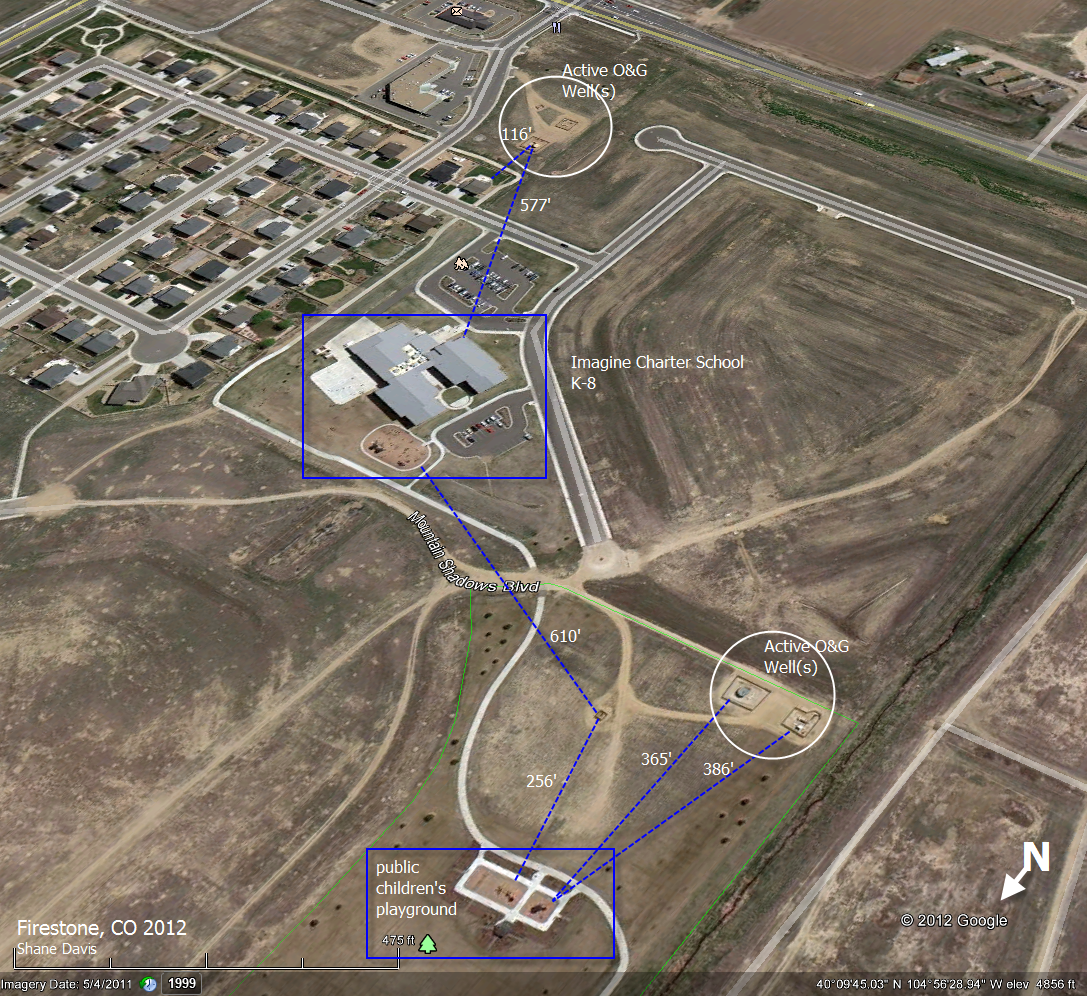
The researchers detected a toxic stew of natural gas-related chemicals, including benzene, a known carcinogen, in the air. Exposure to these chemicals is linked to headaches, asthma symptoms, childhood leukemia, and multiple myeloma. They concluded that people living within a half-mile of these drill pads were at greater risk for health problems. Colorado lets companies sink wells as close as 150 feet to people’s houses.

Click image to enlarge
Photo credit: Shane Davis, Sierra Club, Rocky Mountain Chapter


This study confirms reports of hazardous air pollution and related health problems in communities around the country near natural gas fracking. Fracking entails mixing dangerous chemicals with large amounts of water and sand, then injecting this frack cocktail into wells at extremely high pressure in order to release natural gas reserves. This technique has allowed oil and gas companies to access previously out-of-reach reserves.
As a result, natural gas development has swept across many parts of America at break-neck speed in the past ten years. Unfortunately, federal and state safeguards to protect people and the environment from fracking have not kept pace.
Energy companies have been allowed to run roughshod over communities, leaving contaminated drinking water, dirty air, gutted property values, and greater earthquake risk in their wake. Companies don’t always play by the rules that do exist, and the industry has used its political power to escape accountability for its actions.


Continue reading...


CAST YOUR VOTE