Tuesday, May 10, 2011

Obama Taps Panel of Experts to Make Hydrofracking Cleaner, Safer

Posted by Josh Garrett on May 10, 2011 at 4:06 pm   
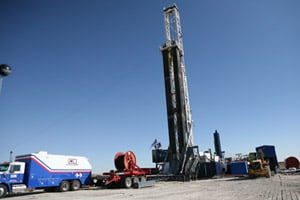
Former CIA director John Deutch will lead a panel of experts in seeking out solutions to the safety and environmental threats posed by hydraulic fracturing. (image: darkgovernment.com)

Following up on the vision of wider but more cautious tapping of America’s vast natural gas reserves that he laid out in March, President Obama has called on a group of experts to explore how to make gas drilling safer. The New York Times reported on Friday that the Department of Energy, at the direction of the president, has convened a diverse panel of experts to come up with solutions to the threat hydraulic fracturing (a.k.a. hydrofracking) poses to underground sources of drinking water.

Hydrofracking has been identified as the key to accessing decades’ worth of natural gas supplies currently locked beneath rock formations in the eastern and western US. As the use of fracking has expanded rapidly in recent years, so has domestic natural gas production. And because propane and other NGLs are byproducts of gas drilling, increased gas extraction has boosted propane supplies substantially. But because it involves blasting millions of gallons of toxic chemicals into the ground at extremely high pressure, hydrofracking has been linked to contamination of rural water supplies. Those cases and the ongoing danger of soil and water pollution have spawned a movement led by environmentalists to halt hydrofracking until it can be more completely and effectively regulated to protect local environments.

The movement to regulate fracking has found a receptive audience in the Obama administration, with both Obama himself and Secretary of Energy Steven Chu publicly stating the need for more investigation into and oversight of fracking activities. The panel named by Secretary Chu last week has two objectives: to recommend steps that will make hydrofracking safer in just 90 days and to outline appropriate safety and environmental guidelines for state and federal regulators. The seven-member panel is led by John Deutch, a chemist and former director of the Central Intelligence Agency, and includes oil and gas industry leaders, academics, and environmentalists.

Despite the diverse makeup of the panel that represents all stakeholders in the fracking debate, Republicans in the House of Representatives swiftly condemned the creation of the panel and its mission in a press release, claiming further studies of hydrofracking are superfluous and place an undue burden on businesses. Republicans also stated that hydrofracking has been used safely for decades and that the Evironmental Protection Agency already has sufficient authority to regulate the practice.

While hydrofracking has been employed by the oil and gas industry for more than 50 years, recent technological advancements like horizontal drilling have allowed fracking to be used in ever-deeper drilling endeavors, bringing about new threats to aquifers and surrounding environments.

Friday, May 6, 2011

A Review of Some Oil and Gas Exemptions from Environmental Regulation

May 6, 2011

As hydraulic fracturing for natural gas continues to attract media attention, I thought that this would be a good time to review several of the major statutory exemptions enjoyed by oil and gas companies. The most substantial exemption, in my view, is the EPA's determination in 1988 that oil and gas exploration and production or "E&P" wastes should not be regulated under Subtitle C of the Resource Conservation and Recovery Act. When Congress enacted RCRA in 1976, the Act contained no oil and gas exemption. Congress eventually directed the EPA to study, though, whether certain oil and gas wastes should be regulated under Subtitle C or not, and after some foot-dragging and a lawsuit, the agency determined that the wastes--although some of them were hazardous--should be exempted.

Specifically, the EPA's 1988 study, located at 53 Fed. Reg. 25,446, concluded that "23 percent of the statistically weighted sample sites generating produced water contain one or more of the toxic constituents of concern at levels greater than 100 times the health-based standards." More generally, the EPA found that between ten and seventy percent of the oil and gas wastes sampled (the percentages varied by type of waste) "could potentially exhibit RCRA hazardous waste characteristics." The EPA concluded, though, that imposing corrective action requirements, including on-site management of the wastes under RCRA, would result in "significant costs to the industry" and that "most existing State regulations are generally adequate for protecting human health and the environment."

The EPA conducted its RCRA exemption study before high-volume "slickwater" hydraulic fracturing in shales had fully emerged. Gas operators in the Barnett Shale did not perfect the slickwater technique, which uses large quantities of water mixed with smaller quantities of chemicals, until the late 1990s, so the EPA has never directly studied whether the several million gallons of fracture solution injected into a well--some of which flow back up and must be disposed of--have hazardous characteristics and might merit a reconsideration of the RCRA Subtitle C exemption. In light of this concern, the Natural Resources Defense Council submitted a rulemaking petition to the EPA in 2010, requesting that the EPA reconsider the 1988 RCRA exemption for oil and gas exploration and production wastes.

Another interesting aspect of the RCRA exemption is its reliance, to some extent, on non-mandatory guidelines that are intended to improve state regulations. Because the EPA recognized that some oil and gas exploration and production wastes were hazardous when it exempted them from RCRA Subtitle C regulation, the agency noted that some gaps in state regulation needed to be filled. As a solution, the agency gave money to the Interstate Oil and Gas Compact Commission to review state regulations, and the IOGCC formed something called the State Review of Oil & Natural Gas Environmental Regulations, Inc., or "STRONGER." STRONGER brings together representatives from industry, state environmental agencies, and environmental groups to review the efficacy of state oil and gas regulations, but STRONGER is of course not a regulatory agency. After reviewing the adequacy of regulations--including recent reviews specific to hydraulic fracturing--STRONGER develops non-mandatory "guidelines" for better state laws. In evaluating whether the RCRA exemption is a good idea, we should therefore look both to the data and assumptions behind the EPA's 1988 exemption decision and to its assumption about how states would improve their laws by, for example, following STRONGER recommendations.

A second important oil and gas exemption in federal environmental law is the exemption of uncontaminated sediments from oil and gas construction sites from National Pollutant Discharge Elimination System stormwater permitting requirements. The EPA has a useful website that summarizes several aspects of this exemption, including: its original text; Congress's attempt to expand the exemption to most oil and gas construction, exploration, and production activities in the Energy Policy Act of 2005; and subsequent litigation that has somewhat narrowed this attempted expansion.

Third, oil and gas operators do not need to prepare annual toxic chemical release forms under the Emergency Planning and Community Right-to-Know Act. (42 U.S.C. 11023 describes the Standard Industrial Classification codes to which the reporting requirement applies, and oil and gas drilling do not appear to fall within the SIC codes covered.) Oil and gas operators must keep material safety data sheets on site under Section 311 of EPCRA, however, and must provide the MSDS to local emergency planning committees upon request. EPCRA specifically allows the operators to claim trade secret status for chemicals when providing MSDS to local emergency planning committees.

Finally, the process of fracturing itself is not regulated under the Safe Drinking Water Act. The EPA had long maintained that hydraulic fracturing did not count as "underground injection" under the Safe Drinking Water Act--a position that the Legal Environmental Assistance Foundation successfully challenged in Alabama--and Congress formally affirmed the EPA's position in the Energy Policy of Act of 2005, in which Congress declared that hydraulic fracturing (unless the fracturing used diesel fuel) did not fall under the SDWA definition of underground injection. This exemption means that oil and gas operators need not obtain a permit for an underground injection control (UIC) well prior to fracturing. Interestingly, a report recently released by Representatives Waxman, Markey, and DeGette concludes that some of the major fracturing companies injected approximately thirty million gallons of diesel fuel "or hydraulic fracturing fluids containing diesel fuel" into fractured wells between 2005 and 2009. It is not clear whether these companies obtained a UIC permit for this fracturing.

The report that reveals the use of diesel fuel is also interesting because several of the major fracturing companies signed a memorandum of agreement with the EPA in 2003 stating that they would not use diesel fuel in fracturing. (The memorandum is no longer available online, but the EPA's press release about the memo is still available.)

In sum, oil and gas companies operate under several substantial exemptions from federal environmental laws. As the Ground Water Protection Council likes to point out, many other federal laws still apply. A company wanting to discharge wastes into a river, for example, must obtain an NPDES permit under the Clean Water Act. Oil and gas companies also must comply with the Endangered Species Act and OSHA regulations, among many other federal laws. But the exemptions should not be ignored, particularly as states, and groups of state regulators such as the Ground Water Protection Council, argue that state regulations adequately control hydraulic fracturing risks. If we continue to rely substantially on states to control the risks, we should ensure that state regulations are sufficiently robust.

-Hannah Wiseman

ENVIRONMENTAL LAW PROF BLOG

Tuesday, April 19, 2011

Friends of the Jordan River, Michigan

Friends of the Jordan is hosting a series of educational videos on the subject of fracking. This process, used to extract natural gas from shale, is being promoted in Northern Michigan. This segment explains the many things that in go wrong in the multi-stage process. The speaker is Dr. Anthony Ingraffea from Cornell University.


Monday, April 18, 2011

Fracking Chemicals Cited in Congressional Report Stay Underground

.
by Nicholas Kusnetz
ProPublica, April 18, 2011, 4 p.m.

(Abrahm Lustgarten/ProPublica)
A report [1] released Saturday confirmed details about what many already knew was happening: gas drillers have injected millions of gallons of fluids containing toxic or carcinogenic chemicals into the ground in recent years. The report, by congressional Democrats, lists 750 chemicals and compounds used by 14 oil and gas service companies from 2005 to 2009 to help extract natural gas from the ground in a process called hydraulic fracturing [2].

That list includes 29 chemicals that are either known or possible carcinogens or are regulated by the federal government because of other risks to human health. As we reported more than a year ago, most of the fluids now used in hydraulic fracturing, or "fracking," are left underground when drilling ends.
The report notes that while the fate of these fluids "is not entirely predictable," in most cases, "the permanent underground injection of chemicals used for hydraulic fracturing is not regulated by the Environmental Protection Agency."

The amount of fluid that remains in a well varies depending on local geology. But in some states, including Texas and Pennsylvania, regulators do not know precisely how much of the fluid returns to the surface for each well. In many cases, particularly in the Marcellus Shale in the Northeast, more than three-quarters of the fluid [3] is left underground.

In 2005, Congress exempted hydraulic fracturing from regulation under the Safe Drinking Water Act. That law allows the EPA to regulate the injection of hazardous fluids into underground wells, a practice widely used to dispose of drilling wastewater. As we wrote back in 2009 [3]:
If another industry proposed injecting chemicals -- or even salt water -- underground for disposal, the EPA would require it to conduct a geological study to make sure the ground could hold those fluids without leaking and to follow construction standards when building the well. In some cases the EPA would also establish a monitoring system to track what happened as the well aged.”
But the oil and gas industry lobbied to protect fracking from such regulation, arguing that most of the fluid remains underground only temporarily. Stephanie Meadows, then a senior policy analyst for the American Petroleum Institute, told us in 2009 that, "Hydraulic fracturing operations are something that are done from 24 hours to a couple of days versus a program where you are injecting products into the ground and they are intended to be sequestered for time into the future."
When they approved the Safe Drinking Water Act exemption, lawmakers believed only about 30 percent [3] of the fluids remained underground. Subsequent reports and interviews with drillers show the amount can reach 80 percent or higher.

The Democrats’ report, which provides the most comprehensive list of the chemicals used to frack natural gas wells, also highlights ongoing gaps in knowledge. It says drillers injected 94 million gallons of fluid -- about 12 percent of the total amount used over the five years -- containing at least one chemical deemed a trade secret.

"In most cases the companies stated that they did not have access to proprietary information about products they purchased 'off the shelf' from chemical suppliers," the report says. "In these cases, the companies are injecting fluids containing chemicals that they themselves cannot identify."
Much is still unknown about what happens to that fluid when it's left inside the well, or whether it threatens drinking water. The industry says that multiple layers of rock protect groundwater from the fluid, but opponents have said water and chemicals might be able to follow natural fissures through the rock. The EPA has recently embarked on a multiyear study [4] to look at this question as well as whether any part of the fracking process poses a threat to drinking water.

A spokesman for the group Energy in Depth, which represents natural gas drillers, said the Democrats' report was unconvincing that fracking represents a real risk to drinking water.
"If the breaking news here is that fracturing fluids contain stuff you would never want to drink, that's not much of a headline at all," said Chris Tucker in an email. "The only way that'd be relevant in a public health context is if those materials were somehow finding their way into potable water supplies underground. Naturally, this report has no ability to show that, precisely because they aren't, don't, and according to regulators all across the country, never have."

Chemicals used in fracturing operations have been found in drinking water, but those chemicals are also present in many other industry practices and have not been directly linked to fracking.
The report is the product of an investigation into hydraulic fracturing by Reps. Henry Waxman, D-Calif., Edward Markey, D-Mass., and Diana DeGette, D-Colo. In January, they released a report showing that the same 14 drilling companies had used more than 32 million gallons of diesel fuel [5] or fluids containing diesel in fracking operations.

Wednesday, April 13, 2011

Colorado Fracking at Lowry Bombing Range, Arapahoe County Colorado

Westin Wilson on Probable Impact of Fracking for Oil at Lowry Bombing Range, Arapahoe County.

Interview with Westin Wilson, former Denver EPA Environmental Engineer, in Denver CO, on April 13, 2011, regarding the probable impact of horizontal hydraulic fracturing for oil at the Former Lowry Bombing Range in Arapahoe County, Colorado. The Colorado State Land Board is considering a proposal to lease 1600-2600 acres of land for 19-98 oil fracking wells.

The land is north of the Aurora Reservoir, above 4 aquifers, in an area designated as low impact and resource sensitive. Fracking would bring very large scale industrial operations that would impact area air, land, water, and quality of life (noise, traffic, road use, fumes, etc).
Mr. Wilson became a whistleblower at the EPA, regarding the conclusions of an EPA final report of 2004, that concluded, contrary to the evidence contained therein, that hydraulic fracturing poses little or no threat to underground sources of drinking water and required no further study. Mr. Wilson subsequently became an EPA whistleblower in order to alert Congress to the possible impacts of fracking on drinking water and the need for further study re impact on water and air quality.

For more info on the Lowry project, see website: http://frackingcolorado.wordpress.com/
Colorado residents:
Please consider our 2 petitions, which contain detailed information about the project's probable impact, our specific requests to mitigate impacts on public health, air quality, water quality, and area quality of life, and also specify that the oil and gas companies (rather than Arapahoe County or the State Land Board or the state of Colorado) would be liable for any related road damages, spills cleanup, or other environmental damages.

Full text petitions on the website: http://frackingcolorado.wordpress.com/


PART 1


PART 2


PART 3


PART 4


PART 5


PART 6


PART 7

CAST YOUR VOTE