Showing posts with label fugitive emissions. Show all posts

Wednesday, May 2, 2012

Video Investigation of Gas Drilling Sites Reveals Invisible Air Pollution

Bay Daily
11/29/2011

A Chesapeake Bay Foundation infrared video investigation of natural gas drilling and processing sites in Pennsylvania, Maryland, and West Virginia found invisible air pollution rising from almost three quarters of those examined.
The Chesapeake Bay Foundation (CBF) sent the video to the U.S. Environmental Protection Agency today with a letter explaining that the video shows that emissions from drilling sites are not being adequately controlled, and that proposed new EPA regulations for the drilling industry do not recognize the extent of the problem or a solution.  CBF's video provides important new evidence that "the industry is not sufficiently limiting the amount of leaks from drilling and processing operations,"Jon Mueller, CBF's Vice President for Litigation, wrote to the federal agency.
The video, which can be viewed by clicking here, demonstrates the need for a comprehensive federal study of the environmental and human health impacts of the growing amount of hydraulic fracturing for natural gas in the region’s Marcellus shale formation, according to two experts who reviewed CBF’s videotapes.
The images also raise troubling questions about exemptions for gas drilling rigs from air pollution control permits and regulation in federal and state law, the experts said.


Tuesday, March 20, 2012

CU Denver study links fracking to higher concentration of air pollutants

The Denver Post
Mark Jaffe
3/20/2012


People living within a half-mile of oil- and gas-well fracking operations were exposed to air pollutants five times above a federal hazard standard, according to a new Colorado study.
The University of Colorado Denver School of Public Health analysis is one of a string of studies in Wyoming, Utah and Colorado that highlight the air-quality impacts of drilling and hydraulic fracturing, or fracking.

"Our data show that it is important to include air pollution in the national dialogue on natural-gas development that has focused largely on water," said Lisa McKenzie, the study's lead author.


The analysis found volatile organic chemicals at five times the level below which the emissions are considered unlikely to cause health problems, according to the federal Environmental Protection Agency's Hazard Index.

The chemicals can have neurological or respiratory effects that include eye irritation, headaches, sore throat and difficulty breathing, the study said.

"We are seeing indications that oil and gas operations can release chemicals that can be harmful to residents," 

McKenzie said.

The study used three years of data around Battlement Mesacollected by Garfield County.
The findings add fuel to the debate in Colorado over how far wells must be set back from residential areas — an issue being reviewed by the Colorado Oil and Gas Conservation Commission. The state requires a 150-foot setback in rural areas and 350 feet in developed areas.

"This study raises questions about those setback standards," said Frank Smith, director of organizing for the nonprofit Western Colorado Congress.

A bill in the state legislature that would have raised setbacks to 1,000 feet died in committee in February.

There are about 47,000 active wells in Colorado. Drilling began on nearly 3,000 more last year, most of them in Weld and Garfield counties, according to the oil and gas commission. In a study of nearly 5,000 well sites from 2009 to 2012, the commission found that 74 percent were at least 1,000 feet from any buildings. But 8 percent were within 500 feet of structures, some of which were residences.

Among the chemicals detected at elevated concentrations in the new study were trimethylbenzenes, aliphatic hydrocarbons and xylenes.

"The greatest health impact corresponds to the relatively short-term, but high emission, well completion period," the study said.


Monday, September 5, 2011

Colorado’s Oil and Gas Rules - Colorado Environmental Coalition


Fact sheet updated 1/25/2011

The results are in: the oil and gas rules approved in 2009 have been a resounding success. They have streamlined permitting, cut red tape, and created regulatory consistency. It’s no surprise that the industry’s recovery has been faster in Colorado than in any other Rocky Mountain state. The lesson is clear -- we can protect communities and treasured landscapes while we create a healthier energy industry.

The rules have addressed very real problems. During two decades of rapid development, drilling rigs and gas wells popped up near schools, businesses, and homes. Toxic chemicals contaminated air and drinking water. Poorly planned and unrestrained drilling led to severe fragmentation of wildlife habitat.

In the coming years, as we manage the impacts of oil and gas development, the rules will continue to protect Colorado communities and encourage constructive cooperation between citizens and industry.

How the rules protect us
Drinking water. The new rules protect drinking water supplies by creating a 300 foot buffer around streams that feed our reservoirs. They protect groundwater by requiring waste pits to be lined and disposed of at appropriate facilities.

Clean air. The new rules protect air quality near homes, schools, and other occupied buildings in northwest Colorado by requiring emission control devices on equipment.

Chemical information during an emergency. The new rules, though not requiring public disclosure of chemicals used in drilling operations, do give officials and medical professionals a right to information needed to respond to emergencies at well sites.

Groundwater testing. The rules help keep polluters accountable by requiring testing in southeastern Colorado at coalbed methane well sites.

Jobs and the economy: the facts
The 2009 slowdown in oil and gas development was caused by economic factors, not by the rules. The recession, an oversupply of gas, and the steep decline in natural gas prices led to the 2009 slowdown. (2008 gas price: $8-10 per thousand cubic ft. 2009 gas price: $2-3 per thousand cubic ft.)1

Colorado is rebounding faster than other states in the West. Since the rules took effect in April 2009, Colorado has outpaced neighboring states in oil and gas activity. 2010 saw the third highest number of permits issued in state history. Colorado is the regional leader in permits issued and new well starts – ahead of Wyoming, New Mexico, Utah and Montana.2

The rules have cut red tape for industry. Processing time for drilling permits has declined since the rules took effect. (63 days in 2008 vs. 35 days by late 2010)3

1 COGCC report presented to Joint Budget Committee, Jan. 7, 2010, aka "Natural Resources Hearing," p. 4

2
"Colorado on Pace in 2010 for Third Most Drilling Permits … Denver Post, Dec. 21, 2010. For 2009 performance, see "Natural Resources Hearing. For first half of 2010, see Neslin memo to COGCC, June 23, 2010.

3 Neslin memo to COGCC, June 23, 2010. Neslin, "Northwest Colorado Oil and Gas Forum," Nov. 2010.

For more information contact: Charlie Montgomery, CEC, 303.405-6707, charlie@ourcolorado.org


What oil and gas interests are saying about the rules ...

"We are not looking for any wholesale changes and we are not asking for any legislation this year…What a lot of producers and the whole business community wants is business certainty. We can mostly live with what we've got," he said. 2011 Legislative Fact Sheet | Colorado Environmental Coalition

Doug Flanders, Colorado Oil and Gas Association, Denver Post, Dec. 31, 2010 http://www.denverpost.com/breakingnews/ci_16982663

"Washington policymakers considering stronger regulations sometimes look to the states for ideas. Colorado’s new oil and gas regulations may be providing exactly that."
Nick Snow, "OGJ Washington Pulse Blog," Oil&Gas Journal, Aug. 19, 2010 http://www.ogj.com/index/blogs/washington-pulse/blogs/OGJ/washington-pulse/post987_2943840259389535922.html

"I’d say we’ve been pleased with the communication channels we’ve had with all the state agencies as all of us have implemented the new rules."
Jim Branch, Piceance Project executive for ExxonMobil Production Co., Grand Junction Daily Sentinel, Dec. 12, 2009. http://www.gjsentinel.com/hp/content/news/stories/2009/12/29/123009_Energy_gas_side_www.html

"We really think that …Colorado has been a leader, and we think the state rules and regs have been sufficient … "[W]e went through the process on the rules and regs in Colorado and in Wyoming and we support the states’ efforts …"
Lisa Hough, BP Senior Director of Government and Public Affairs, Colorado Independent, July 30, 2010 http://coloradoindependent.com/58499/colorado-conservation-groups-push-congress-for-tougher-drilling-regs

"The new rules, we didn’t know how that was going to manifest itself, but we’ve seen some good progress. Now, things are pretty consistent."
Al Harrison, Vice President of exploration and production for the Denver region and the Piceance Basin, Williams Corporation, Grand Junction Daily Sentinel, Aug. 3, 2010 http://www.gjsentinel.com/news/articles/hickenlooper_talks_about_creat/P20/

For more information contact: Charlie Montgomery, CEC, 303.405-6707, charlie@ourcolorado.org

Friday, August 26, 2011

Fracking Complaint of the Day - Fugitive Emissions?

Weld County
Colorado

Date Rec'd:


8/15/2011


Complaint taken by:


DEBBIE BALDWIN
DocNum:     200318191 API number: 05-123-31420
Complaint Type:

Complainant Information

Name: Steve DeJong
Address: Eric , 80516
Date Received: 8/15/2011
Connection to Incident: land owner 
Description of Complaint:
<><><><><><><><><><><><><><>
Operator:NOBLE ENERGY INC
Oper. No.
100322
Date of Incident: 8/15/2011
Type of Facility: WELL
Well Name/No.
County Name:
Operator contact:
qtrqtr: NWNW section: 13 township: 7N range: 64W meridian: 1
Complaint Issue
Issue: ODOR Assigned To: DEBBIE BALDWIN Status: Resolved 8/15/2011
Description: well was being followed back after fracing in preparation for killing the well and installing the pump. The odor made Mr. DeJong light headed and nauseated. at the time of the incident the wind was blowing from the west to the east. his house is approx 2,300 ft due east of the well site. Mr. DeJong was inquiring about the states requirements for emmissions from and regulation of this type of activity.


Resolution:


Debbie Baldwin contacted Curtis Rueter, Nobel Environmental manager and explained complaint and provided Mr. DeJong's contact information. Debbie Baldwin and Diana Burn contacted Mr. DeJong to explain that Noble's operations were in compliance with cogcc regulations and that the well should be back on line by tomorrow. This well is not normally vented or flared
Letter Sent?: N
Report Links:

Other Notifications
Date: 8/15/2011 Agency: Noble Contact: Curtis Rueter

Response or Details
Curtis Rueter will contact the operations people and investigate this incident. I suggested that in the future should operations like this be conducted again that Noble make arrangement to contact Mr. DeJong and inform him about the proposed work


 --------------------------------------


There are no real meaningful regulations regarding toxic air emissions for the oil and gas industry, so it is no surprise that the oil company turned the switch back on to continue production. The oil and gas industry is EXEMPT from EPA laws designed to protect YOU!

It's an unregulated industry that is forcing itself on the lives of the innocent.  The victims have no rights.  The victims are you.


Fugitive emissions video. You be the judge


please comment

Wednesday, August 24, 2011

DOE Advisory Board Releases Shale Gas Recommendations

Source: American City and Country
Aug 18, 2011 5:13 PM  

A subcommittee of an advisory board for the U.S. Department of Energy (DOE) is recommending several new regulations for the natural gas industry, including requiring full disclosure of chemicals used in hydraulic fracturing. Hydraulic fracturing, otherwise known as "fracking," is the process of pumping chemicals into shale deposits to drive natural gas to the surface, and officials in several states have expressed concern over possible contamination of ground water by the process.

The recommendations, released Aug. 11 by the Secretary of Energy Advisory Board Shale Gas Production Subcommittee, call for increased measurement, public disclosure and a commitment to continuous improvement in the development and environmental management of shale gas, according to a DOE press release. Specifically, the report includes recommendations in four areas:

• The identity of all chemicals used in "fracking" fluids should be fully disclosed. While finding that the risk of leakage of fracturing fluids through fractures made in deep shale reserves is remote where there is large separation from drinking water, the report finds that there is no economic or technical reason to prevent public disclosure of all chemicals used in fracturing fluids. It also calls for the creation of a national database of all public information made about shale gas to permit easier access by all interested parties.

• Measures should be taken to reduce emission of air pollutants, ozone precursors and methane as quickly as practicable, and standards to reduce emissions of all air contaminants should be adopted promptly. The subcommittee recommends the design and rapid implementation of measurement systems to collect comprehensive methane and other air emissions data from shale gas operations, and that a federal interagency planning effort be launched immediately to analyze the overall greenhouse gas footprint of shale gas operations.

Continue reading...


Read the press release or committee's full report.


please comment


Wednesday, July 20, 2011

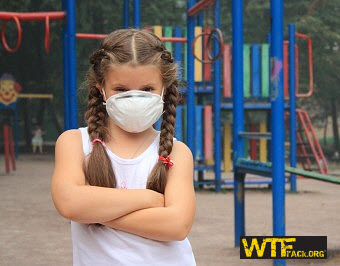
Children Forced to Breathe Toxic Chemical Emissions From Gas Wells?

Why would anyone with any cerebral capacity construct oil and gas wells near residential areas, agricultural areas, water-ways, places of special concern, National and State Parks, open spaces and our children's schools?

WTFrack.org calls on every person who reads this article and imagines their own children in the schools depicted  below to:

 Forward this article to every person on your email list, Twitter account, facebook your friends and family to let them know just how far the Oil & Gas Industry will go to make a dollar.

This is the health of innocent children and residents that are at risk. The communities have been given false information about the safety of hydraulic fracking operations and the potential toxic emissions that may be released.

It matters not if you lean left, right, somewhere in the middle, or  fringed edges, there comes a time when practicing humanity makes sense. Shame on the Oil & Gas Industry, shame on the Oil and Gas Commission and City Council for allowing this to happen! And everyone else hiding under a dollar bill, shame on you too!

Global Community Monitor released a report with the alarming results of the air sampling in the San Juan Basin of northwest New Mexico and southwest Colorado, and in Garfield County, Colorado. According to the report, analysis by a certified lab detected: "a total of 22 toxic chemicals in the air samples, including four known carcinogens, as well as toxins known to damage the nervous system and respiratory irritants.

The chemicals detected ranged from 3 to 3,000 times higher than what is considered safe by state and federal agencies." The pollutants of concern in these locations include benzene, a known carcinogen, and hydrogen sulfide, which can be fatal."

Source: Global Community Monitor

-------------------------
Short video on fugitive emissions. A must see! The emissions are invisible to the eye but viewed via infrared camera, the emissions are very apparent.


-----------------------

The schools below are in Firestone, Colorado. Please send us an email for a specific school in a specific city and we will let you know if there are any wells in it's proximity. No cost-


All wells, such as the one above should be tested to ensure the safety of public air quality.  If emissions are being released then it should be addressed immediately.  However, adaptive management is always too late.

Forward this information to everyone you know for the health of the children please...


WTFrack.org


CAST YOUR VOTE